- enquiries@pdaltd.com
- Main Office: 01925 759380

Noise pollution has been linked to health problems in people as well as local wildlife. From excessive and prolonged road noise close to properties, to music and entertainment venues, and even to noisy neighbours, loud and inescapable noises and sounds can cause various health issues, such as hearing loss, high blood pressure and stress.
Noise from human activity in the built environment is a particular issue in larger towns and cities, where road noise, passing trains, and overhead aircraft can reverb off buildings and amplify their negative impact on health and well-being.
Just because environmental noise pollution is invisible and therefore cannot be seen or touched, doesn’t mean it cannot cause considerable distress. The environment has many ambient sounds, from thunder and howling wind to the gentle rustle of leaves on trees.
Whilst rustling leaves are only around 20 to 30 decibels, which is a very tolerable level of background noise, no one would want to endure the sounds of continuous thunderclaps hitting 120 decibels or the constant wail of sirens coming from the street outside that can be anything between 120 and 140 decibels.
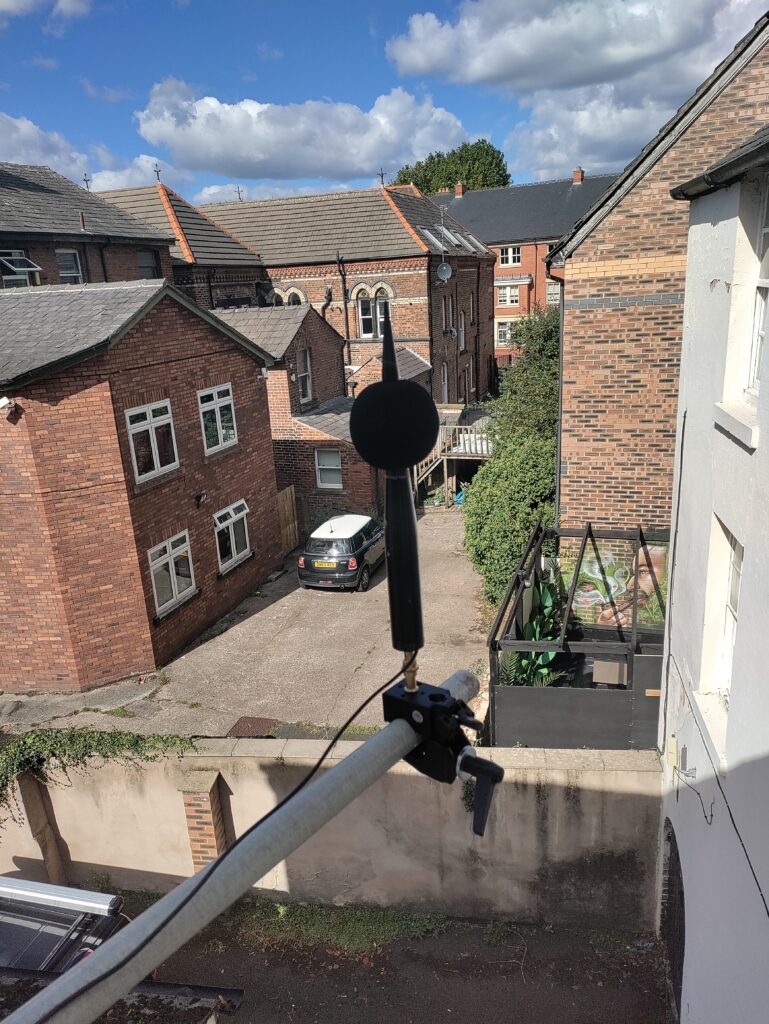
As mentioned above, excessive and repetitive noise pollution negatively impacts the health of millions of people. The most commonly recorded health issue caused is Noise Induced Hearing Loss (NIHL). However, excessive exposure to loud noise has also been linked with causing sleep disturbances, increased stress and anxiety, high blood pressure and heart disease.
Noise-related health issues can affect people of all ages, especially children and the elderly. Poor quality of sleep and high-stress levels have resulted in matters such as poor reading skills, impaired memory, and short attention spans in children living close to airports or busy streets.
This has led the government in recent years to take positive steps towards reducing environmental noise risks impacting health. All new housing developments and redevelopment projects where a change of use from commercial to residential is undertaken will need to undertake an assessment of the noise climate.
An assessment of environmental noise is generally required for most new planning applications to assess the impact of noise on new developments. PDA offers environmental noise assessment surveys to help contractors choose the most appropriate noise-absorbing building and insulation materials, ensuring their construction plans meet government requirements.
All new building projects need to obtain planning permission from local authorities in England, which must include an environmental noise survey. This survey will consist of recommendations for noise mitigation and should be produced by a qualified acoustic consultant firm, such as PDA. The survey will then form part of the planning application for residential building projects or construction projects that will expose the building(s) to an existing noise source, such as a railway line, airport or busy road.
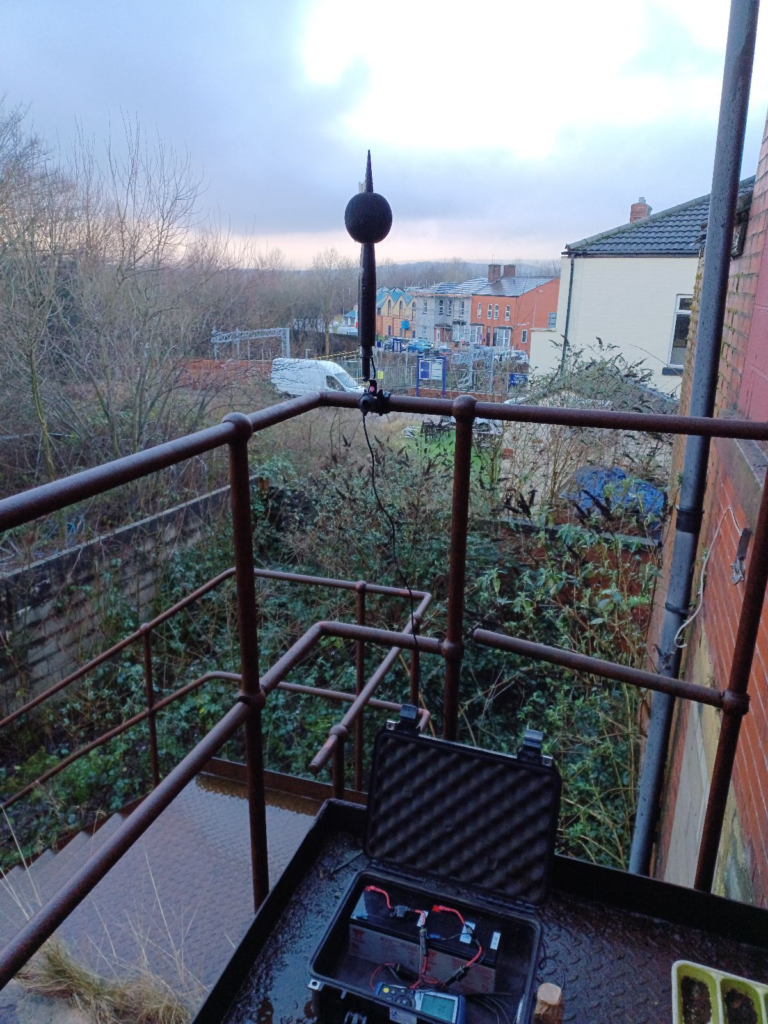
Environmental noise surveys are particularly relevant when construction firms plan redevelopment projects of former industrial or commercial premises for residential use. Former mills and factory buildings are popular conversion projects in former industrial areas, but their renovation plans must include a sound insulation scheme to meet the requirements of BS:8233 / WHO guidelines.
It is also not unusual for local authorities to request an assessment of BS:4142 where a component of industrial/commercial noise is present at the proposed redevelopment or building site. New industrial or commercial buildings may also require an assessment of BS:4142 as part of their planning application.
Because of PDA’s consultant’s involvement in the revised versions of BS:8233 and BS:4142, we are the go-to consulting company for your environmental noise survey needs.
PDA’s services include:
Contact us to discuss your environmental noise survey needs. Our professional consultancy team are here to help.
© 2025 PDA Ltd. All rights reserved.
Website Design by M3SM